
Introduction to the Spanish Tarot
The Spanish School of Tarot is a fascinating chapter in the history of tarot, characterized by its rich artistry and multicultural influences. While the earliest mentions of tarot in Spain date back to 1378, the journey of tarot in this region has been anything but straightforward. Despite early prohibitions by the Church, the Spanish never ceased to play card games, leading to a unique development of tarot decks that reflect a blend of cultural and esoteric traditions.
Historical Context and Early Prohibitions
In the late 14th century, tarot began to appear in official documents in Spain, specifically in the Municipal Archives of Barcelona. However, by 1382, card games faced prohibitions, first in Barcelona, followed by Castile and Turia (Valencia). These bans were influenced by the Church’s warnings post-Albigensian Crusade, which targeted Cathar heretics linked to papermakers and printers in France and Italy. Despite these restrictions, the Spanish continued to indulge in card games, developing intricate designs and themes in their decks.
The Influence of Jewish Mysticism
Spanish Jewish mystics maintained close connections with their counterparts in France, sharing interpretations and practices that influenced the development of tarot in Spain. This cultural exchange may explain why a tarot from France, imbued with Spanish artistic elements, appeared before France developed its own original deck. The Etteilla Tarot, an 18th-century French creation, is a notable example, although its creator, Etteilla, often masked the true meanings of his symbols to avoid breaching Masonic oaths.
The Birth of Spanish Tarot
Spain’s first truly original tarot deck, El Gran Tarot Esoterico, was commissioned in 1977 by the Fournier card publishing company to commemorate the six hundredth anniversary of tarot’s European appearance. This deck, while reminiscent of the Marseilles Tarot, is rich with details linking it to ancient Hebrew legends and biblical astro-alphanumeric correspondences. These elements suggest an esoteric tradition deeply rooted in historical and cultural narratives.
Cultural Diversity in Spanish Decks
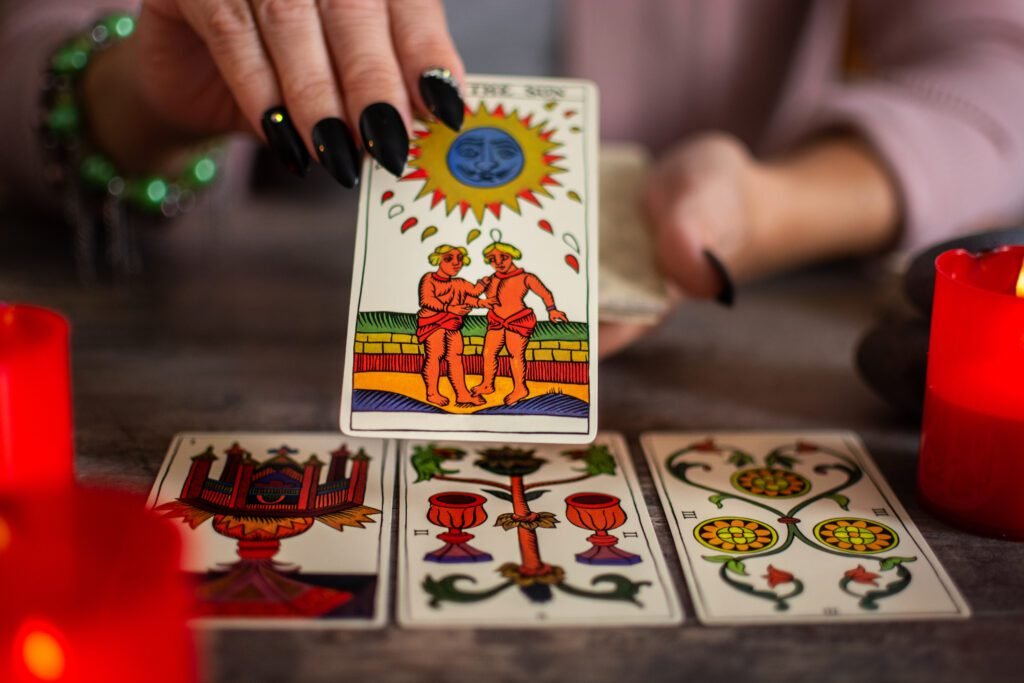
Spanish playing cards have long been celebrated for their multicultural imagery, reflecting the diverse influences that reached Spain via trade routes from Africa, China, the Middle East, and the Americas. This diversity is evident in the ornate costumes and action poses of figures on the cards, often representing the ‘four corners of the world.’ Such variety is a testament to the open-mindedness of Spanish culture regarding card imagery.
Modern Developments and Influences
The late 20th century saw a resurgence of tarot decks in Spain, with the Catalan Taroccos being the first seventy-eight card tarot published in the country. This deck incorporated classical archetypes, Hebrew letters, and symbols akin to Egyptian hieroglyphics. Subsequent decks, like the Balbi Tarot and the Universal Dali Tarot, continued to explore esoteric themes, blending traditional and modern influences in their designs.
The Legacy of Spanish Tarot
The Spanish School of Tarot stands out for its eclectic mix of influences and its commitment to preserving and evolving esoteric traditions. While early decks were influenced by French and Italian designs, later Spanish tarots have carved out their own identity, celebrating the country’s multicultural heritage and esoteric knowledge. This legacy continues to inspire tarot enthusiasts and scholars alike, offering a rich tapestry of history and culture to explore.
The Spanish culture has been the most multicultural, colorful, and open-minded of all the European cultures when it comes to playing card imagery.
| Year | Event | Significance |
|---|---|---|
| 1378 | First mention of tarot in Spain | Documented in the Municipal Archives of Barcelona |
| 1382 | Prohibition of card games | Implemented by the Church in Barcelona, Castile, and Turia |
| 1900 | Publication of Catalan Taroccos | First Spanish tarot deck, influenced by French designs |
| 1977 | El Gran Tarot Esoterico commissioned | Celebrated the 600th anniversary of tarot in Europe |
Fonte: www.tarot.com