
The Persistent Mysteries of Human Existence
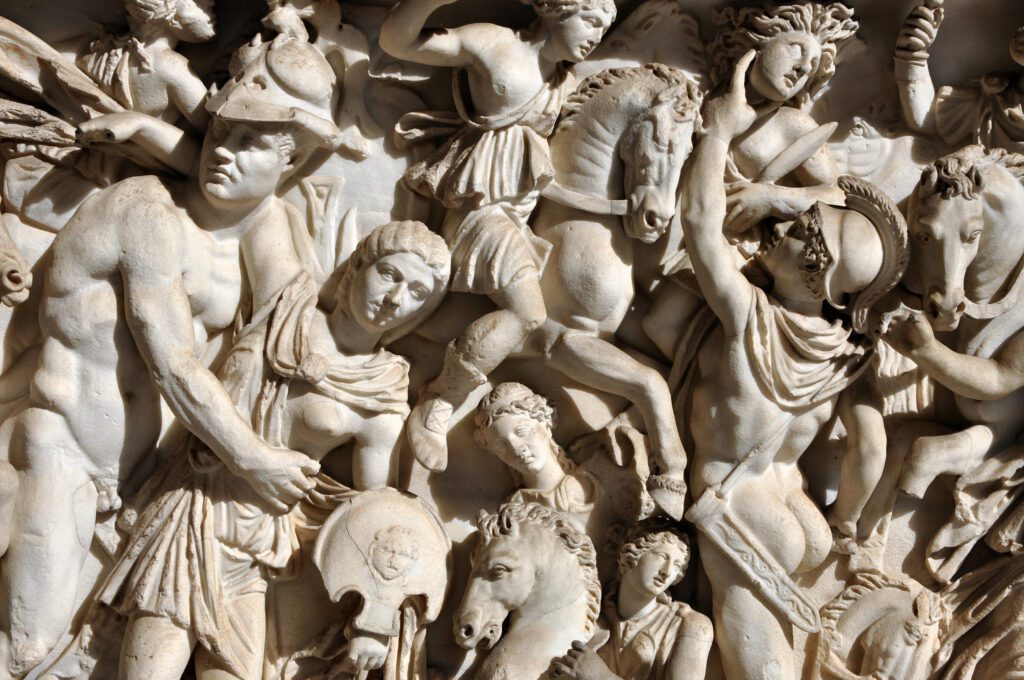
In an age where humanity can map the universe, edit genes, and simulate intelligence, we find ourselves grappling with age-old questions about existence. Despite modern science’s profound insights into the material world—allowing us to study matter at subatomic levels and trace the origins of stars—fundamental questions about life remain as elusive as ever. What gives life meaning? How does power affect individuals? Why does suffering transform some while breaking others? These inquiries have persisted throughout human history, transcending the bounds of modern civilization.
Throughout the ages, cultures have sought to engage with these questions, often preserving their insights through mythology. These ancient stories continue to matter because they encapsulate human experiences and offer frameworks for understanding life’s complexities. Ancient civilizations observed patterns in nature, human behavior, and consciousness, sometimes expressing their understanding through mathematics, astronomy, philosophy, or powerful narratives that have endured for millennia.
The Interconnectedness of Knowledge

Modern discourse often struggles with compartmentalization, separating science, spirituality, philosophy, psychology, and cosmology into distinct categories. However, many ancient traditions, such as those found in Sanatana Dharma, approached knowledge holistically. Astronomy, mathematics, medicine, ecology, ritual, philosophy, and consciousness were all interconnected, with inquiries into the external world considered as meaningful as those into the inner self.
While not every sacred narrative should be interpreted as literal science, dismissing these traditions as mere fantasy overlooks their symbolic depth. These stories encode human experiences through symbolism, preserving insights into human nature that remain relevant today.
The Unchanging Inner Landscape
Despite technological advancements that have transformed the external world, the inner landscape of human consciousness has changed little. We continue to grapple with grief, loneliness, ego, ambition, jealousy, morality, desire, loss, and mortality. Our search for meaning and fear of uncertainty persist, as does our longing for transcendence.
Technology alters the conditions of life, but human consciousness evolves at a much slower pace. This is why ancient narratives remain relevant; they resonate with the timeless aspects of human experience. For instance, Arjuna’s dilemma on the battlefield in the Bhagavad Gita reflects universal themes of confusion, paralysis, and the burden of responsibility—emotions recognizable to anyone facing difficult choices.
Symbolic Literacy and Modern Society
Modern culture often pushes toward literalism, demanding that something be either historically factual or entirely meaningless. However, sacred narratives have traditionally operated differently, using symbolism to convey complex human experiences that cannot be easily explained through direct language. Symbolic literacy, the ability to interpret layered meanings, is something modern societies are gradually losing as we prioritize quick information consumption over deep understanding.
Stories once helped individuals navigate their inner lives, offering frameworks for interpreting personal experiences. Mythologist Joseph Campbell identified mythology’s functions as mystical, cosmological, sociological, and psychological, highlighting how traditional knowledge systems engaged with these dimensions through philosophy, ritual, narrative, and contemplative practice.
Preserving Awe and Connection
One of mythology’s oldest functions is preserving a sense of awe before existence. While modern science explains the universe in extraordinary detail, explanation alone does not create an intimate connection with existence. Understanding how stars form differs from experiencing the wonder of the cosmos. Ancient narratives often sought to maintain this connection to the larger scale and mystery of existence, reminding us that human life is part of something greater.
In highly technological societies, life can become reduced to productivity, efficiency, and measurable outcomes. Mythological thinking interrupts this reduction, reminding us that existence encompasses dimensions beyond quantification. This enriches scientific inquiry, deepening our understanding of the cosmos and our place within it.
Locating Humanity Within the Cosmos
Mythology helps individuals locate themselves within the vastness of existence. Ancient cultures sought to understand humanity’s place within the cosmic order, using creation narratives, cyclical time, and stories of balance and imbalance to position human life within a larger framework. Many Indic traditions, for example, approached existence cyclically, emphasizing patterns of creation, preservation, dissolution, and regeneration.
This perspective remains relevant today, as modern societies often prioritize endless expansion over sustainable cycles. Cyclical thinking introduces concepts of rhythm, interdependence, decay, renewal, and limitation, offering a counterpoint to the relentless pursuit of growth. Mythology preserves ecological intelligence, viewing the natural world as a living presence rather than mere resources for human use.
The Enduring Relevance of Mythological Themes
Mythology’s psychological dimension is perhaps its most fascinating aspect. Ancient stories repeatedly address human patterns that remain recognizable today—ego, attachment, power, greed, desire, transformation, sacrifice, and fear. These themes persist across civilizations because they reflect enduring human struggles, regardless of technological advancement.
Characters like Shiva, Kali, Sita, and Karna embody emotional and existential states that continue to resonate with modern audiences. Mythology becomes deeply personal as it reveals insights into human consciousness that remain relevant despite the passage of time.
Mythology and Modern Storytelling
Even today, modern societies create mythic structures, though they rarely label them as such. Superhero films, fantasy epics, dystopian fiction, and science fiction explore themes similar to those found in ancient myths—corruption, temptation, sacrifice, power, identity, destruction, exile, redemption, and transformation. This persistence highlights humanity’s ongoing search for symbolic frameworks to process fear, morality, technological change, and uncertainty.
While commercial entertainment and sacred narratives may overlap symbolically, they are not identical. Sacred narratives carry civilizational memory, offering ethical frameworks and exploring moral dilemmas that remain relevant to contemporary life.
Science and Mythology: A Complementary Relationship
Modern discourse often frames science and mythology as opposing forces, yet this dichotomy is unnecessarily rigid. Science represents one of humanity’s greatest achievements, transforming nearly every aspect of contemporary life. Rejecting science in favor of spirituality is illogical, yet reducing reality to only what can be measured creates limitations. Many ancient knowledge systems engaged with scientific observation alongside philosophical and spiritual inquiry, approaching existence holistically.
Older civilizations did not separate scientific and sacred thinking as modern discourse often does. They studied planetary motion, developed systems of medicine and mathematics, and engaged in metaphysical inquiry, demonstrating a comprehensive approach to understanding reality.
The Timelessness of Mythological Inquiry
Mythology remains relevant because it addresses questions that modern science still struggles to fully answer—questions about consciousness, inner suffering, psychological evolution, desire, power, and the balance between external progress and inner harmony. These inquiries belong to science, philosophy, ethics, and lived experience, reminding us that intelligence can move in multiple directions simultaneously.
To understand themselves, human beings continue to engage with ancient narratives that offer insights into human nature. While technologies evolve, inner struggles remain familiar, and mythology provides frameworks for navigating these timeless challenges. Ancient narratives survive because they carry forward observations about life, encoding philosophical, psychological, and ecological wisdom.
Mythology maps the interior landscape of human life, naming the patterns of grief, transformation, moral crisis, and renewal that recur across every generation.
Fonte: priyankasharmakaintura.com