
The Origins of Rosicrucianism
Rosicrucianism emerged in the early 17th century as a spiritual and philosophical movement inspired by a series of mysterious texts known as the Rosicrucian manifestos. These enigmatic documents told the tale of a mythical figure named Christian Rosenkreuz, whose adventures in pursuit of wisdom laid the groundwork for the Fraternitas Rosae Crucis, or the Brotherhood of the Rosy Cross.
The Rosicrucian manifestos, including ‘Fama Fraternitatis’ and ‘Confessio Fraternitatis,’ introduced Rosenkreuz as a wise and enlightened figure who possessed secret knowledge of divine mysteries, spanning alchemy, medicine, and spirituality. These texts propagated the ideals of the Rosicrucian Brotherhood, emphasizing the pursuit of wisdom, the healing arts, and societal transformation through understanding the universe’s mysteries.
Christian Rosenkreuz: A Mythical Figure
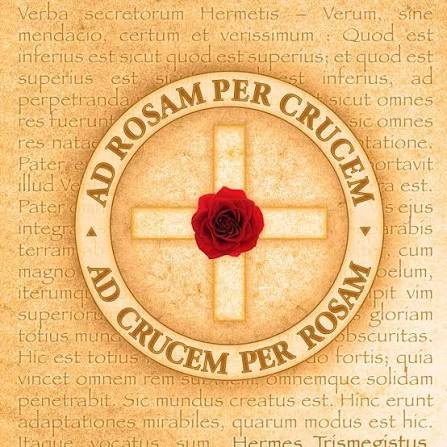
Christian Rosenkreuz, a legendary figure, is central to Rosicrucianism’s origins. Allegedly a German mystic from the late 14th and early 15th centuries, Rosenkreuz’s story not only forms the foundation of the Rosicrucian tradition but also serves as an allegory for spiritual enlightenment and transformation.
According to legend, Rosenkreuz embarked on a journey to the East, where he encountered secret societies and schools of wisdom. During his travels, he acquired profound knowledge of mystical arts, including alchemy, Kabbalah, and Hermetic sciences. Upon returning to Europe, he founded the Fraternitas Rosae Crucis to share his teachings and promote spiritual and intellectual development.
Core Teachings of Rosicrucianism
The teachings of Rosicrucianism incorporate elements of mysticism, alchemy, and esoteric philosophy. Central to its doctrine is the belief in spiritual transformation and inner alchemy, symbolized by the Rosy Cross. This cross represents the unification of opposites, such as masculine and feminine energies, serving as a tool for spiritual development and the pursuit of esoteric knowledge.
Christian Rosenkreuz’s work emphasizes the importance of spiritual transformation and inner alchemy in achieving enlightenment and understanding divine mysteries. The process of spiritual awakening involves purifying oneself through virtues and pursuing esoteric knowledge, a concept central to the Rosicrucian belief system and influential in various other esoteric traditions.
The Rosicrucian Brotherhood and Its Influence
Founded by Christian Rosenkreuz, the Fraternitas Rosae Crucis functions as a secret brotherhood dedicated to society’s spiritual and intellectual transformation. The Rosicrucian manifestos call for a renewal of the human spirit and a broader understanding of divine laws through acquiring and disseminating esoteric knowledge.
Both traditions encourage introspection and the pursuit of knowledge, fostering a deeper understanding of oneself and the world. Members often engage in rituals that promote personal development and societal improvement. The exchange of ideas between these groups has led to a rich tapestry of thought, influencing various philosophical movements throughout history. As contemporary society grapples with questions of meaning and purpose, the teachings of Freemasonry and Rosicrucianism offer valuable insights into the quest for spiritual fulfilment. Their enduring appeal lies in their ability to adapt and resonate with new generations seeking wisdom and connection.
This vision has inspired many generations of seekers and profoundly affected various movements within Western esotericism. Although Rosenkreuz is considered a mythical figure, his influence on Western esotericism is significant, shaping later movements and thinkers.
Interconnections with Freemasonry
While Freemasonry and Rosicrucianism have distinct origins and teachings, they share some overlap and interconnectedness. Both traditions use symbols and allegory to convey spiritual teachings. For instance, the square and compasses in Freemasonry relate to Rosicrucian ideas of balance and harmony between opposites.
Moreover, the Rose Cross, a symbol of the Rosicrucian tradition, has been incorporated into certain Masonic rituals and degrees. The publication of the Rosicrucian manifestos in the 17th century intrigued intellectuals and alchemists across Europe, influencing the development of Freemasonry in the 18th century. Some Masonic writers and ritualists drew upon Rosicrucian themes and imagery for inspiration, further intertwining the two traditions.
Differentiating Between Freemasonry and Rosicrucianism
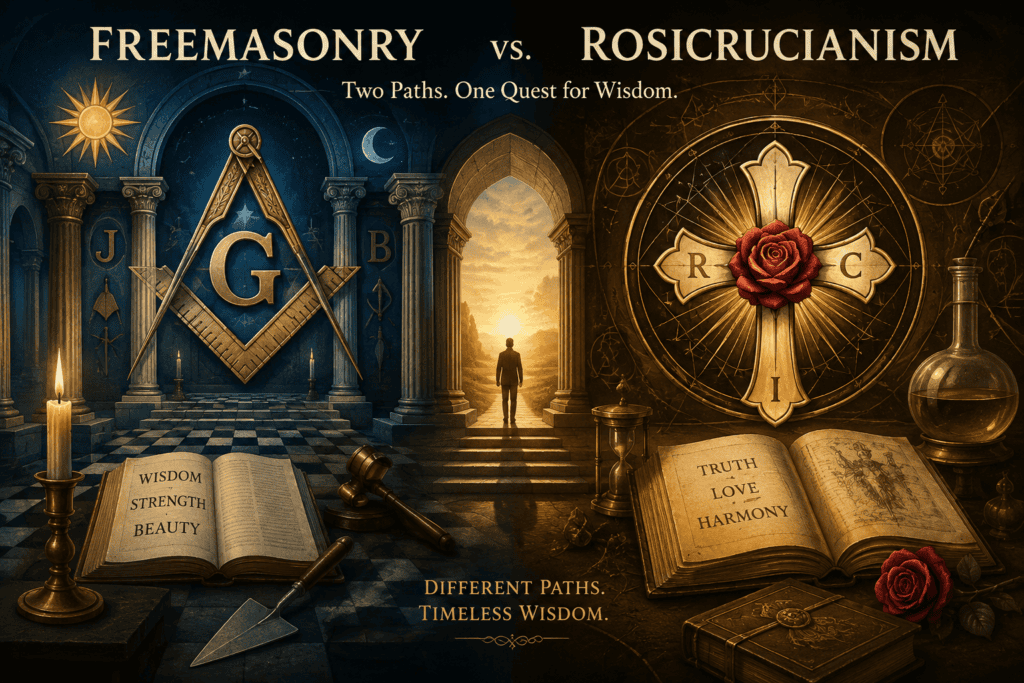
Despite some overlapping elements, Freemasonry and Rosicrucianism are distinct organizations with separate histories, philosophies, and practices. Each has a unique membership, organizational structure, and hierarchical system. While some individuals may belong to both organizations, it is not a requirement, and each tradition should be understood as a separate entity.
As society continues to evolve, the relevance of these traditions is increasingly recognised in contemporary discussions about personal growth and self-discovery. Many individuals find solace in the rituals and philosophies offered by both Freemasonry and Rosicrucianism, seeking guidance in a rapidly changing world. This resurgence in interest highlights a collective yearning for deeper meaning and connection beyond material concerns. Furthermore, interfaith dialogues often draw upon the ethical teachings present in both traditions, fostering unity and understanding among diverse belief systems. Ultimately, the enduring nature of these esoteric practices reflects humanity’s quest for wisdom and enlightenment across generations.
The origins and philosophical teachings of Freemasonry and Rosicrucianism differ significantly. Freemasonry focuses on moral and ethical development through rituals and symbolism derived from stonemason guilds. In contrast, Rosicrucianism is rooted in mystical, alchemical, and esoteric teachings found in the myth of Christian Rosenkreuz and the manifestos.
Impact on Western Esotericism
Both Freemasonry and Rosicrucianism have significantly influenced the development of Western esotericism, shaping numerous spiritual and philosophical movements’ ideas and practices. During the Enlightenment, they played crucial roles in promoting rationalism, tolerance, and the search for a universal system of morality.
In the 19th century, Freemasonry and Rosicrucianism deeply impacted the Occult Revival, a period marked by a resurgence of interest in the esoteric, supernatural, and hidden aspects of human experience. By disseminating and preserving esoteric knowledge, these traditions laid the foundation for later movements such as Theosophy, the Hermetic Order of the Golden Dawn, and various schools of spiritualism and magic.
Modern Influence and Legacy
Today, both Freemasonry and Rosicrucianism continue to influence modern esotericism and spiritual practice. They boast extensive membership bases and actively promote wisdom, moral development, and spiritual growth. By fostering a sense of continuity and connectedness with ancient mysteries and teachings, they serve as essential links to the rich heritage of Western esoteric thought.
Both traditions encourage personal introspection and the pursuit of knowledge, inviting members to explore deeper truths about existence. Their rituals and ceremonies often evoke a sense of mystery, appealing to those seeking a profound understanding of life’s greater purpose. As cultural movements evolve, both Freemasonry and Rosicrucianism continue to adapt, attracting new generations interested in their ideals. The global landscape of spirituality has been enriched by their teachings, which emphasise the importance of ethical living and community service. Ultimately, their legacies persist, inspiring ongoing dialogue about morality, enlightenment, and the nature of the universe.
In conclusion, while Freemasonry and Rosicrucianism share some connections and similarities, they remain distinct traditions with unique histories, teachings, and organizational structures. Their connection is primarily seen in shared symbols, the influence of the Rosicrucian manifestos on Freemasonry, and their incorporation into higher degrees of certain Masonic systems. However, it is crucial to respect and understand the distinction between these two esoteric traditions and appreciate each for its contribution to Western spiritual and philosophical thought.
Christian Rosenkreuz exemplifies the seeker’s path and highlights the fundamental principles of the Rosicrucian tradition.
| Aspect | Freemasonry | Rosicrucianism |
|---|---|---|
| Origins | Medieval stonemason guilds | 17th-century mystical texts |
| Core Focus | Moral and ethical development | Spiritual transformation and alchemy |
| Key Symbols | Square and compasses | Rosy Cross |
| Influence | Enlightenment and Occult Revival | Western esotericism and spiritual movements |
Fonte: www.thesquaremagazine.com