
The Historical Context and Evolution of Buddha’s Image
In the intricate tapestry of South Asian religious history, the figure of Gautama Buddha occupies a unique and often contentious position. Born in 563 BC in the Shakya Janapada, an area now known as Lumbini, Buddha’s journey from a prince to an enlightened spiritual leader is well-documented. However, the narrative surrounding his identity has evolved significantly over centuries, particularly in the context of Hinduism and Buddhism.
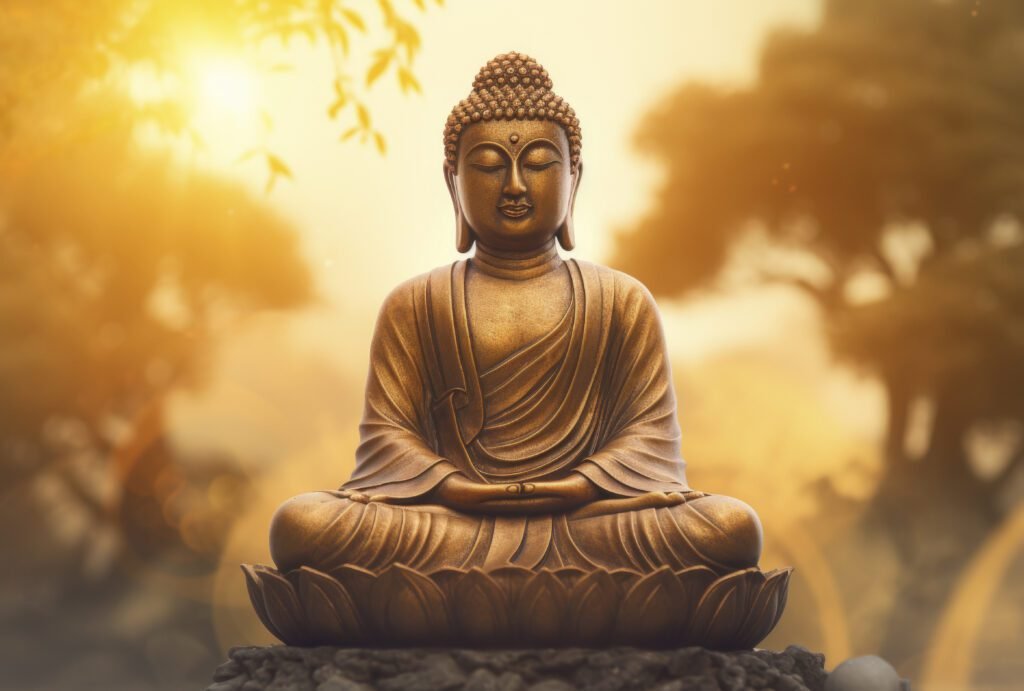
In contemporary Hinduism, particularly among Vaishnavites, Buddha is revered as the ninth avatar of Vishnu. This belief, however, is a relatively recent development in the long history of Hindu religious thought. Originally, the Buddha was seen in a much less favorable light by the orthodox Brahmanical traditions, which viewed him as a formidable competitor. This transformation in perception is rooted in historical and philosophical shifts that have shaped the narratives of both religions.
Philosophical Divergence: Buddhism vs. Vaishnavism
The philosophical differences between Buddhism and Vaishnavism are profound and foundational. Gautama Buddha’s teachings, centered on concepts such as Dependent Origination (Pratītya samutpāda) and the doctrine of Emptiness (Shunyata), stand in stark contrast to the Vaishnavite belief in the immortality of the soul and the existence of a supreme soul (Paramatman). While Vaishnavites hold the soul as eternal, Buddha rejected the notion of a permanent soul, emphasizing instead the impermanence of all things.
This fundamental philosophical divergence is crucial in understanding why Buddhists reject the notion of Buddha as an incarnation of Vishnu. For Buddhists, Buddha is not a divine figure or a god but an enlightened teacher who achieved Nirvana by overcoming all forms of attachment, aversion, and delusion. The concept of an avatar, which implies a divine incarnation, is incompatible with Buddhist teachings on liberation and Nirvana.
The Emergence of the Ninth Avatar Concept
The idea of Buddha as the ninth avatar of Vishnu first appeared in the Vishnudharmottara Purana, a text dating back to the sixth or seventh century. This narrative was likely a strategic response to the growing influence of Buddhism, which posed a challenge to the Brahmanical orthodoxy. By integrating Buddha into the Hindu pantheon as an avatar, the orthodox traditions sought to mitigate his impact by reinterpreting his teachings as a divine deception meant to lead demons away from the Vedic path.
This reinterpretation, however, did not genuinely embrace Buddha’s philosophy. Instead, it served as a means to absorb his influence into the existing religious framework without adopting his core teachings. The Purana’s portrayal of Buddha as a deceptive figure underscores the complex and often adversarial relationship between these two religious traditions.
Buddha in the Ramayana and Historical Misinterpretations
The Ramayana, one of Hinduism’s most revered epics, references Buddha in a manner that reflects the historical tensions between the two traditions. In the text, Buddha is labeled as a ‘thief,’ a characterization that suggests a significant departure from the reverence he receives in contemporary Hindu narratives. This depiction highlights the historical context in which the Ramayana was composed, a time when Buddha had not yet been assimilated into the Hindu pantheon as an avatar.
The shift in Buddha’s portrayal from a rival to a revered figure within Hinduism illustrates the dynamic nature of religious narratives and the influence of historical context on these stories. This transformation was not immediate but evolved over centuries as Buddhism’s presence in the Indian subcontinent waned and Hinduism’s narrative adapted to incorporate Buddha in a way that aligned with its theological framework.
The Legacy and Continuing Debate
Despite the historical and philosophical divergences, the legacy of Gautama Buddha continues to resonate across the globe. His teachings on compassion, mindfulness, and the nature of suffering have transcended cultural and religious boundaries, influencing countless individuals and movements throughout history.
The debate over Buddha’s identity as an avatar of Vishnu remains a point of contention between Hindu and Buddhist communities. For Buddhists, the notion undermines the essence of Buddhahood, which is characterized by complete liberation from the cycle of birth and death. Conversely, for some Hindus, viewing Buddha as an avatar reflects an inclusive approach to religious diversity, albeit one that does not fully align with Buddhist doctrine.
As both traditions continue to evolve, the dialogue surrounding Buddha’s identity serves as a reminder of the rich and complex interplay between history, philosophy, and religion. It underscores the importance of understanding and respecting the distinct perspectives that shape the spiritual landscape of South Asia and beyond.
He who sees Pratītya samutpāda sees the Buddha, and he who sees the Buddha sees Pratītya samutpāda.
| Concept | Buddhism | Vaishnavism |
|---|---|---|
| Soul | Non-existent | Immortal |
| Buddha’s Role | Enlightened Teacher | Ninth Avatar of Vishnu |
| Core Philosophy | Impermanence, Emptiness | Eternalism, Supreme Soul |
Fonte: english.nepalnews.com