
Introduction to Hermeticism
Hermeticism stands as a unique tradition that blends metaphysical inquiry, religious practice, and the occult sciences into a cohesive wisdom tradition. Unlike mainstream Western philosophy, which often separates rational thought from religious and scientific pursuits, Hermeticism integrates these elements as pathways to spiritual enlightenment and divine union. At its core, Hermeticism values esoteric knowledge, known as gnosis, and ritual transformation, emphasizing the interconnections between the macrocosm and microcosm. This tradition also incorporates practical arts such as astrology, alchemy, and magic as part of its spiritual toolkit.
Origins and Core Texts
The roots of Hermeticism can be traced back to the Hellenistic and Roman periods, specifically within the multicultural hub of Greco-Egyptian Alexandria. It revolves around writings attributed to Hermes Trismegistus, a syncretic figure merging the Greek god Hermes with the Egyptian deity Thoth. The Corpus Hermeticum, a collection of Greek texts preserved through Byzantine manuscripts and first printed in 15th-century Italy, forms the backbone of Hermetic literature. These writings propose a monotheistic yet emanationist view of divinity, highlighting the divine nature of the human mind and a path of spiritual knowledge leading to rebirth and transcendence beyond fate.
Philosophical and Theological Tenets
Central to Hermetic thought is the concept of a single, ineffable God or ‘One’ from which the cosmos emanates. This God is both transcendent and immanent, often depicted as Mind (Nous) or Light. The universe is envisioned as a living, ensouled entity, governed by Logos and interwoven with sympathies and correspondences that connect all levels of reality. Humans, according to Hermetic anthropology, are dual beings—mortal in body yet possessing an immortal, divine intellect. The primary challenge is overcoming ignorance of this true nature, achievable through gnosis, a transformative knowledge of God that leads to spiritual rebirth and liberation from the influences of fate and planetary powers.
Macrocosm and Microcosm
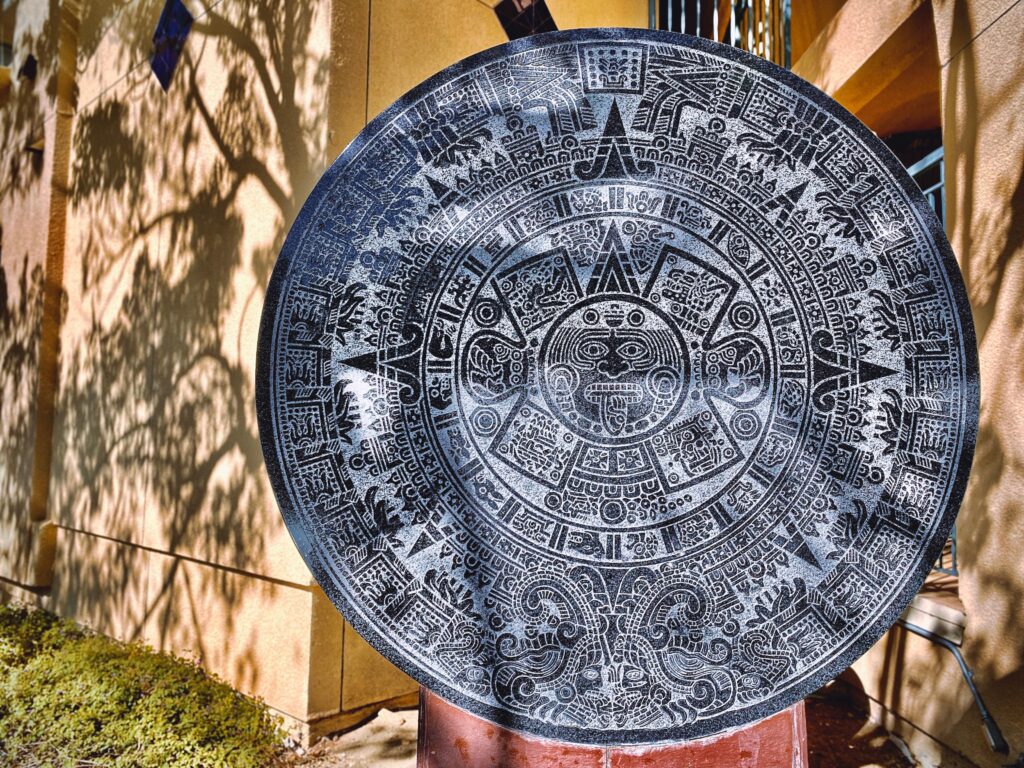
A foundational idea in Hermeticism is the correspondence between the macrocosm (the universe) and the microcosm (the individual human being). This principle underlies the Hermetic approach to medicine, magic, and alchemy, where actions at one level are believed to resonate throughout the whole. The Emerald Tablet, a brief yet profoundly influential text, encapsulates this cosmological view with its famous aphorism, ‘That which is below is like that which is above.’
Practical Arts and Ethical Living
Hermeticism encompasses practical arts such as magic, astrology, and alchemy, which are seen as expressions of a sacred science uniting experiment, symbolism, and spiritual discipline. While proponents view these practices as vital to spiritual advancement, critics argue they rely on unverified cosmological assumptions and lack empirical validation. Ethically, the Hermetic tradition emphasizes purity, self-control, compassion, and reverence for the cosmos. An ethical life is closely tied to right knowledge; as the mind is purified of ignorance and passions, it naturally aligns with the divine order.
Historical Reception and Evolution
Throughout history, Hermeticism has experienced various receptions and reinterpretations. In Late Antiquity, it coexisted with Middle Platonism, Neoplatonism, Gnosticism, and emerging Christianity. Neoplatonists like Iamblichus and Proclus engaged with Hermetic texts, integrating them into their theurgic systems. During the Middle Ages, Hermetic motifs appeared in Arabic alchemical and astrological literature, and in Latin Christendom, only select texts were known, contributing to medieval understandings of magic and talismans.
The Renaissance witnessed a major revival of Hermeticism when Marsilio Ficino translated the Corpus Hermeticum into Latin. Figures like Ficino and Giovanni Pico della Mirandola regarded Hermes as a source of primordial wisdom predating Plato and Moses. This period saw Hermeticism influence Renaissance magic, visionary cosmologies, and the development of a symbolic, mathematically ordered view of nature.
In the Early Modern and Enlightenment periods, the status of Hermetic texts as primordial wisdom was challenged by Isaac Casaubon’s philological analysis, yet Hermetic currents persisted. The 19th and 20th centuries saw a resurgence of Hermeticism in occult orders like the Hermetic Order of the Golden Dawn, Theosophy, and Rosicrucian organizations. Works such as ‘The Kybalion’ popularized Hermetic principles for a broader audience, though they were distinct from classical Hermetica.
Contemporary Hermeticism
Today, Hermeticism exists in various forms, ranging from scholarly-informed practices to eclectic spiritual systems. Scholars debate the extent to which modern Hermetic practices relate to ancient Hermeticism or represent modern constructions utilizing Hermetic vocabulary. Nonetheless, Hermeticism continues to occupy an ambiguous position between religion, philosophy, and esotericism. It shares much with Platonism and Neoplatonism but differs in its attribution of teachings to divine revelation and its embrace of ritual magic and occult sciences.
Conclusion
Hermeticism exemplifies a timeless aspiration to unify knowledge of nature, spiritual transformation, and metaphysical speculation under a sacral vision of reality. Whether viewed as a historical curiosity, a philosophical alternative, or a living spiritual path, it has played a significant role in the intellectual and religious history of the Mediterranean and the modern West. Hermeticism’s enduring influence highlights its capacity to inspire and challenge our understanding of the universe and our place within it.
Hermeticism illustrates an enduring aspiration to unite knowledge of nature, spiritual transformation, and metaphysical speculation under a single, sacral vision of reality.
Fonte: philopedia.org