
The Origins of Tarot Cards
When you hear the term ‘tarot’, your mind might immediately drift to images of mystical fortune tellers or the diverse decks of 78 cards available in stores. While the imagery on tarot can vary greatly, their structure remains consistent. It consists of the Major Arcana, also known as the trump cards, and the Minor Arcana, composed of four suits.
However, it might come as a surprise to many that these cards were not originally intended for divination purposes. In fact, it wasn’t until the 18th century that tarot was used for fortune-telling. Their initial purpose was quite different: they were designed for a game, and intriguingly, they are the ancestors of the modern 52-card deck we use today.
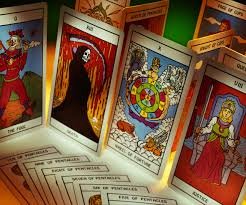
A Game of Strategy and Skill
In 1938, George Coffin shed light on this fascinating history through an article in Games Digest titled ‘Taro: Ancestor of Whist’. Coffin detailed his journey of discovery, learning that tarot, originally used for gaming, had an intriguing past.
He found that in Italy, il tarocchi was still utilized for games similar to Whist. This revelation highlighted the similarities between the standard playing cards we know today and the tarot decks. Both have four suits; in standard cards, these are Spades, Hearts, Clubs, and Diamonds, while tarot features suits like cups, batons, coins, and swords.
Each suit in both decks consists of cards numbered from ace to ten, followed by court cards. In tarot, these are the Page, Cavalier, Queen, and King, whereas in modern decks, they are the Jack, Queen, and King.
Historical Roots and Evolution
The precise origins of tarot are often debated among historians, but there is substantial evidence of their use well before the 15th century. Most scholars trace their beginnings to the 1440s in Italian cities such as Venice, Milan, Florence, and Urbino.
The Visconti-Sforza Tarot, dating back to around 1442, is often cited as the earliest surviving tarot. These cards were associated with the Duke of Milan and featured suits that closely resemble those we recognise today: Coppe (cups), Bastoni (batons), Denari (coins), and Spade (swords).
The Game of Tarocchi
The original game played with these, known as il tarocchi, was a complex game involving bidding, melding of points, and the taking of tricks. According to S.R. Kaplan, tarot games have evolved over the centuries and are still played in parts of Europe today.
Although the rules vary by region and players, the essence of the game remains. The Fool card, known as the wild card, plays a unique role in these games. Michael Dummett describes the game in ‘The Visconti-Sforza Tarot’, explaining that while trionfi (trumps) are permanent, the Fool card does not have the power to win a trick but can be played at any time, not bound by the rules of following suit or playing a trump.
From Game to Divination
The transition from a game to a tool for divination is an intriguing chapter in the history of tarot. The shift began in the 1780s in France when people started interpreting the alchemical symbols and illustrations on the cards as having deeper meanings beyond mere aesthetics.
This marked a separation between those who played for leisure and those who sought spiritual insights. The Rider-Waite-Smith Tarot deck, introduced in 1909, became one of the most recognisable decks for divination, further cementing their role in esoteric practices.
The Enduring Legacy of Tarot
The Enduring Legacy of Tarot
From their origins as beautifully hand-painted cards in Italy to the modern decks used for divination and games today, tarot cards have undergone significant transformations in both appearance and purpose.
Despite these changes, the original rules of the game tarocchi still thrive in Europe, offering a connection to the past. For those interested in exploring this historical game, all that is needed is a tarot deck and some friends, providing an entertaining evening reminiscent of the gatherings held by the Duke of Milan and his family in the 15th century.
The ordinary pack of playing cards is a direct descendent from the fourteenth century tarot deck.
| Tarot Suit | Modern Playing Card Suit |
|---|---|
| Cups | Hearts |
| Batons | Clubs |
| Coins | Diamonds |
| Swords | Spades |
Fonte: www.museumofplay.org