
The Victorian Fascination with the Occult
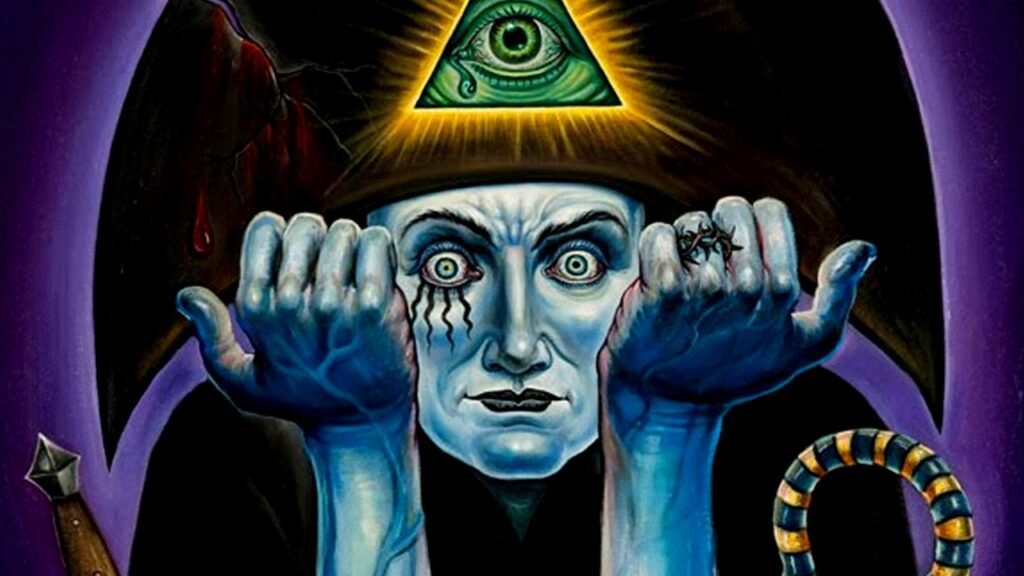
In the latter part of the 19th century, Victorian England was a society of contrasts. While many were embracing the advancements of the Modern Age, others were drawn to the mystical allure of the occult. This period was marked by a cultural fascination with astral travel, mind-altering substances, and ancient magical practices. Aleister Crowley, a figure who would later be dubbed ‘the wickedest man in the world,’ was at the forefront of this movement. His life and works exemplify the era’s complex relationship with the mystical and the rational.
Crowley’s journey into the occult was not an isolated phenomenon. He was part of a broader cultural exploration that included other intellectuals and artists of the time. The fascination with the mystical was as much a part of the cultural fabric as the scientific advancements of the era. This duality is captured in the works of authors like Alex Owen, who delve into the intricate world of magicians and occultists in late Victorian and Edwardian England.
A Fateful Journey to the Desert
In late 1909, Aleister Crowley and his companion Victor Neuburg embarked on a journey to the North African desert outside Algiers. The official reason for their trip was leisure, but underlying this was a deeper purpose: to engage in a series of magical ceremonies. Crowley, an experienced traveler and mountaineer, was familiar with the region and sought to escape the confines of England. Neuburg, a recent Cambridge graduate, was drawn into Crowley’s orbit, both out of admiration and as a novice initiate of Crowley’s Magical Order of the Silver Star.
Their journey into the desert was not merely a physical one but a profound exploration of the self through the lens of advanced magical practices. The ceremonies they performed were a blend of ritual magic and sexual acts, a precursor to Crowley’s later development of sex magic, or ‘Magick’ as he termed it. These rites were both sublime and terrifying, pushing the boundaries of personal identity and magical practice.
Aleister Crowley: A Complex Figure
Aleister Crowley’s life is a tapestry of contradictions. Born into privilege, he was a man of great intellect and talent who rejected societal norms in pursuit of esoteric truths. His reputation as a dark figure and self-proclaimed Antichrist was both a product of his actions and the public’s imagination. Crowley’s involvement in the Hermetic Order of the Golden Dawn and his subsequent founding of his own magical order cemented his status as a controversial figure.
Crowley’s approach to magic was deeply psychological, exploring the potential and dangers of the human psyche. His practices often blurred the lines between high aspirations and the so-called black arts, leading to personal and professional conflicts. Despite this, his influence on the occult world is undeniable, with practitioners of his Magick found across the globe.
The Desert Rituals and Their Aftermath
The magical ceremonies performed by Crowley and Neuburg in the desert were transformative for both men. Crowley viewed these rituals as a serious attempt to access ancient magical systems, while Neuburg, as Crowley’s chela, was bound by a vow of obedience. The rites they performed were not just about magical exploration but also about confronting and embracing the unknown aspects of themselves.
The experience in the desert marked a turning point for Crowley. It was a moment where he let go of known magical practices and embraced a path with no guarantees. The rituals they performed were intense, involving the invocation of spirits and the crossing of metaphorical and literal boundaries. For Crowley, this was a step towards ultimate self-realization, exposing the limits of a unified sense of self.
The Personal and Cultural Impact
Crowley’s journey and the magical practices he engaged in had far-reaching implications. They highlighted the complex interplay between magic, sexuality, and personal identity. Crowley’s life story, with its elements of rebellion, self-destruction, and genius, continues to captivate and provoke thought.
The events in the desert also had a profound impact on Neuburg, who was left grappling with the psychological and spiritual aftermath of their experiences. The journey was both a personal trial and a reflection of the broader cultural fascination with the occult. Crowley’s work challenged conventional notions of self and reality, leaving a legacy that continues to influence modern interpretations of magic and mysticism.
“The Place of Enchantment is immensely informative—a whole world of magicians and occultists among the great and good of late Victorian and Edwardian England is resurrected in all its complexity.”—Thomas Laqueur
Fonte: press.uchicago.edu