
The Unique Language of Tarot
In a world dominated by words, where we meticulously craft sentences and choose our vocabulary with care, Tarot offers a refreshing departure. It communicates through a rich tapestry of images, metaphors, and emotions, forming a language that is both structured and fluid. This balance between precision and creativity makes Tarot an ideal tool for engaging with the Unknown, offering insights that words alone often cannot convey.
In the initial stages of learning Tarot, many turn to the little white book that accompanies most decks. This guide provides meanings for each card, serving as a starting point much like phonetic reading serves beginners in language acquisition. However, true fluency in Tarot comes not from rote memorization, but from immersing oneself in the language, understanding its nuances, and experiencing it in context.
The Journey to Fluency
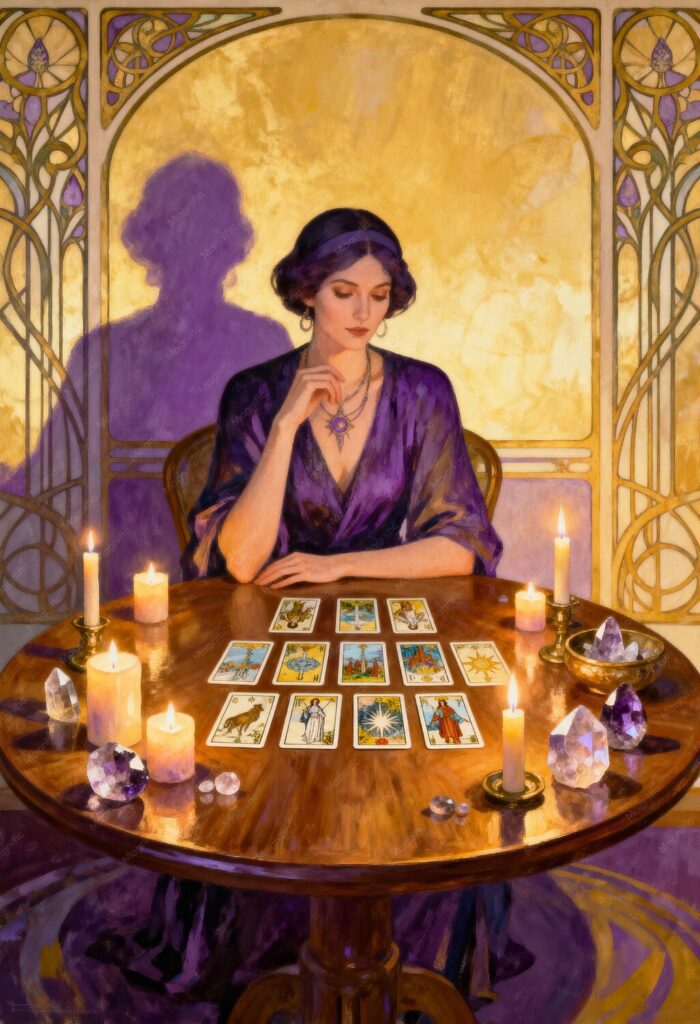
Learning Tarot is a dynamic process. It involves asking questions, drawing cards, and interpreting their meanings in the context of one’s life. Each reading acts as a dialogue, gradually unveiling the integrity of this unique language. With every card drawn, Tarot gently encourages personal growth, allowing practitioners to advance at their own pace.
Tarot is akin to a language with an alphabet of 78 units, each card more intricate than a simple letter. Similar to Chinese characters, each card carries a depth of meaning. Tarot, like sign language, is both visual and conceptual, yet it is deeply rooted in its ancient origins, offering a slower, more reflective pace. Unlike spoken languages, Tarot is read, not spoken, and its interpretation is as varied as the individuals who engage with it.
The Evolution of Tarot
Over a century ago, the Tarot experienced a renaissance with the introduction of the Rider-Waite-Smith deck. Pamela Colman Smith’s artistry has since become the cornerstone of modern Tarot, inspiring countless new decks that continue to evolve the language. In today’s Information Age, this evolution is accelerating, with new decks and readers constantly expanding the boundaries of Tarot.
Every new deck and reading contributes to the living language of Tarot, each artist adding their unique voice and keeping the Tarot relevant. The creativity of Tarot artists ensures that the language remains vibrant and adaptable to the needs of contemporary seekers.
A Personal Connection
Yetta Snow, a professional tarot reader based in Seattle, exemplifies the personal connection that many find with Tarot. Her business, Present Day Tarot, emphasizes the use of Tarot to infuse everyday moments with meaning. For those interested in exploring this path, Present Day Tarot offers classes, special events, and more, inviting individuals to deepen their understanding of this ancient art.
The language of Tarot is inherently complex, with each reading offering a distinct narrative. Tarot cards tell the stories of our lives, revealing the trials, triumphs, and challenges we encounter. By drawing cards and laying them out, we gain insights into our personal journeys, guided by the timeless wisdom of the Tarot.
“Tarot is both visual and conceptual, like Sign Language. But Sign is quick and up to the minute, whereas Tarot is decidedly slow and tethered to its ancient roots.”
Fonte: presentdaytarotblog.wordpress.com