
A Gathering of Modern Witches
In the serene setting of a 200-year-old estate in Ireland, a group of women come together to seek solace and empowerment through witchcraft. These women, numbering fifteen, gather in a sunlit room, each carrying hopes of communicating with spirits—be it ancestors, forest fairies, or witches of the past. The atmosphere is charged with anticipation, reminiscent of the first day of school.
Guided by Isabella Ferrari, affectionately known as Penny the Witch, these women embark on a journey of self-discovery and spiritual connection. They create divination maps, akin to Ouija boards, using crystal pendulums to seek answers from the spiritual realm. The session is not just about reaching out to spirits but about reconnecting with their own intuition and inner wisdom.
A Space for Healing and Self-Expression
The retreat, known as Green Veil, offers more than just spiritual communication. It is a place for women to confront and heal from ancestral trauma, to build a community, and to learn to trust their instincts. Over two and a half days, participants engage in activities like candle-making and emotional sharing, forming bonds that transcend the brief duration of the retreat.
Isabella Ferrari emphasizes the importance of self-trust and intuition, encouraging the women to embrace their feelings and voice their anger—a sentiment often suppressed in traditional societal structures. For many, this retreat is the first time they have felt heard and validated in their expressions of frustration and anger.
A Movement Rooted in History and Rebellion
The rise of witchcraft retreats like Ferrari’s is part of a broader movement that has gained momentum over the past decade. This resurgence is intertwined with historical patterns of spiritual and anti-authoritarian movements. In the 1960s, the counterculture movement saw women adopting occult imagery as a form of protest, a trend that continues today with women seeking alternatives to male-dominated religious and political systems.
Many women attending these retreats have roots in strict religious households but find themselves drawn to witchcraft as a means of maintaining a spiritual connection without the constraints of traditional religious institutions. This shift is part of a larger trend, with over 30% of Americans identifying as spiritual but not religious.
Personal Journeys and Collective Healing
The personal stories of women like Tara Monte and Alyse Benjamin highlight the diverse backgrounds and motivations of those drawn to witchcraft retreats. Monte, who faced trauma and loss, finds in the retreat a community that supports her in ways traditional systems have failed. Benjamin, meanwhile, seeks a sisterhood and a spiritual path free from judgment and rigid labels.
For these women, the retreats offer a sanctuary from the societal pressures and injustices they face. The community they form provides a sense of belonging and protection, allowing them to reclaim control over their lives and spiritual journeys.
A Reflection of Societal Shifts
Witchcraft retreats are not just about personal healing; they reflect broader societal shifts and the growing disillusionment with traditional systems of power. Scholars like Sabina Magliocco see witchcraft as a conduit for righteous anger and a form of resistance against societal norms that marginalize women and queer people.
The retreats provide a space for women to articulate their dissatisfaction with political, religious, and social structures that have failed them. Through rituals and communal activities, participants find empowerment and a renewed sense of agency.
The Commercialization of Witchcraft
Despite the spiritual and communal aspects of witchcraft retreats, there is criticism regarding their commercialization. Some argue that the mainstreaming of witchcraft reduces it to a marketable commodity, stripping it of its radical roots. However, others, like Thorn Mooney, argue that marketing has always been a part of witchcraft and that the essence of what women seek in these retreats cannot be fully commodified.
Ultimately, the retreats offer more than just a temporary escape; they provide a framework for women to explore their spirituality and reclaim their power in a world that often seeks to diminish it.
A Closing Ritual Under the Moonlight
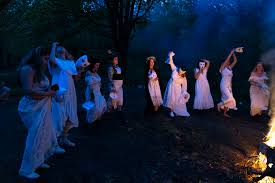
As the retreat draws to a close, the women gather for a final ritual under the moonlight. They write down what they wish to release—be it body shame, guilt, or anxiety—and cast these burdens into a bonfire. This symbolic act of release is a powerful reminder of the transformative potential of community and self-expression.
While the retreat provides a momentary sanctuary, the challenges and burdens of everyday life await the women upon their return. Yet, the connections formed and the empowerment gained offer a lasting impact, reminding them of the strength and support they have found within their newfound sisterhood.
We’re so fucking sick of it that we’re gonna do things our way, whether you call it crazy or not.
Fonte: www.theguardian.com